


























Frequently asked questions
Explore answers about online grocery, fulfilment, warehouse automation, and delivery. Find out how Ocado solutions can fit your existing operation and support your next stage of growth.
Understanding Ocado
Ocado Group provides software, automation, and robotics for ecommerce, supply chain, order fulfilment, warehouse operations, and last-mile delivery. Grocery retailers can use the Ocado Smart Platform to connect selected parts of their online operation. Businesses in other industries can use mobile robotics, automated storage and retrieval, and robotic handling where these fit their products and workflows.
The Ocado Smart Platform (OSP) combines software, automation, AI, and data science for online grocery. It connects ecommerce, supply chain, fulfilment, and last-mile delivery, helping retailers align the shopping experience with inventory and operational capacity. Retailers can adopt selected capabilities or a broader platform, depending on their business needs and existing systems.
No. Retailers can begin with selected Ocado Smart Platform capabilities or adopt a broader connected platform. The starting scope depends on the problem they want to solve, the systems they already use, and the technical and commercial dependencies involved. Further capabilities can be added as the operation and business case develop.
Choosing the right fulfilment model
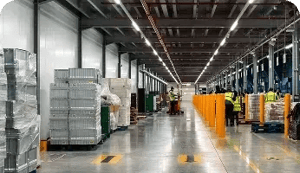
Store fulfilment prepares online orders in a store that also serves shoppers. A dark store is dedicated to online order preparation. A centralised customer fulfilment centre brings inventory and order processing together to serve a wider area or higher volumes. Retailers can combine these formats, assigning each a role based on demand, product range, service windows, and local economics.
Yes. Ocado In-Store Fulfilment (ISF) uses software to guide manual picking and order preparation in stores and dark stores. It helps coordinate order priorities, picking routes, and handovers without requiring automation hardware. Suitable devices, connectivity, configuration, and integration are still needed for the agreed deployment.
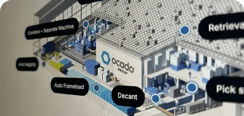
In-Store Fulfilment guides associates through manual picking and order preparation. Store Based Automation (SBA) adds compact automated storage, retrieval, and picking capacity in or beside a store. The two approaches can serve different locations or work together at one site, depending on order demand, available space, product handling, and the investment case.
Serving grocery customers
Ocado connects forecasting, replenishment, and inventory information to help retailers make better stock decisions for each collection or delivery window. In-Store Fulfilment also supports quality checks, minimum expiry-date guidance, and packing instructions. These capabilities help align the customer promise with the products available and the handling needed to prepare each order.
Yes, with the appropriate solution and operating design. In-Store Fulfilment supports guided handling of fresh, chilled, and frozen products. Ocado customer fulfilment centres can support different temperature zones, with OSP Autofreezer available within the selected design for frozen fulfilment. Storage conditions, handling processes, and equipment suitability are assessed for each deployment.
Ocado Smart Platform forecasting and replenishment help retailers align inventory with expected demand, reducing the risk of excess stock reaching the end of its usable life. Connecting those decisions with availability and fulfilment helps teams manage the trade-off between product choice, freshness, and waste. Results depend on the retailer’s range, data, processes, and operating conditions.
Connecting inventory and availability to each collection or delivery window helps retailers offer products the operation expects to fulfil. Better forecasting and replenishment can reduce gaps between the basket ordered and the stock available for picking. When a substitution is needed, guided fulfilment workflows help associates manage it as part of order preparation.
Ocado’s ecommerce solution is designed for the large, frequent, and varied baskets typical of grocery shopping. It supports search, favourites, repeat purchases, personalised offers, promotions, and checkout across web and app experiences. Connections with availability, fulfilment, and delivery help the storefront present products and service options the operation can support.
Yes. Ocado’s last-mile capabilities support scheduled, same-day, on-demand, click and collect, and unattended delivery models. Route and slot planning connect the choices offered to shoppers with the capacity available to fulfil them. The services offered in each market depend on the retailer’s operating model, fulfilment readiness, and delivery resources.
Planning and growing your operation
Yes. Integration depends on the solution selected. OSP can connect with relevant ecommerce, supply chain, and last-mile systems. Ocado’s warehouse automation solutions can connect with warehouse management, order management, transportation management, and enterprise resource planning systems. Interfaces, data flows, dependencies, and operating responsibilities are assessed for each deployment.
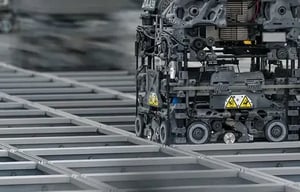
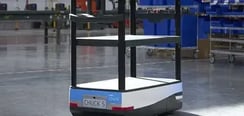
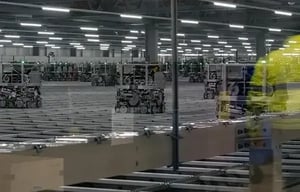
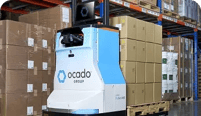
Mobile robots help move goods and guide work within a warehouse. An automated storage and retrieval system (ASRS) stores inventory in a dedicated structure and retrieves it for processing. Ocado mobile robotics can target picking and transport, while storage and retrieval automation adds dense inventory capacity. Both can form part of one strategy, with interfaces and workflows designed for the site.
Deployment time depends on the solution, integration scope, site readiness, and operating requirements. Software and mobile robotics projects have different requirements from automated storage or a customer fulfilment centre. Ocado assesses the work involved and agrees a rollout plan for the specific deployment, including configuration, testing, training, and operational handover.
Yes, with a capacity plan appropriate to the solution. Mobile robotics can add fleet capacity or guided workflows as requirements change. Customer fulfilment centres and storage automation can be designed for modular growth within site constraints. Capacity decisions should consider the complete process, including replenishment, picking, consolidation, and dispatch, so one improvement does not create another bottleneck.
Yes. Ocado offers warehouse automation for third-party logistics and distribution, consumer goods, apparel and general merchandise, and pharmaceutical and healthcare operations. Options include mobile robotics, storage and retrieval, and robotic picking or sortation for suitable products. The right configuration depends on the industry’s handling requirements, workflows, and operational priorities.
Ocado works with customers on operational assessment, solution design, integration planning, deployment, and ongoing improvement. Support is tailored to the selected technology and operating model. Maintenance arrangements, training, monitoring, and responsibilities should be agreed as part of the deployment scope, so teams understand how the solution will be operated and supported.

Talk With an Expert
Complete the fields below to connect with a member of our sales organization to learn more.