




















Glossary
Essential terms and concepts related to Ocado Group and its products and technology.
3PL
3PL stands for third-party logistics and refers to companies that provide outsourced logistics and distribution services to businesses. Services typically include transportation, warehousing, inventory management, order fulfilment, and freight forwarding.
Advanced Sensing
Advanced sensing uses sensors and related processing to gather and interpret information about the environment. Ocado’s On-Grid Robotic Picking uses sensing to help control how robotic arms handle products on the Grid.
API
APIs, or application programming interfaces, act as intermediaries that allow two software systems to communicate with each other. OSRS requires integration with customers' business systems via APIs to facilitate seamless data exchange and synchronisation. This ensures that OSRS can efficiently interact with existing warehouse management systems, order processing software, and other business applications, enabling streamlined operations and accurate information flow throughout the supply chain.
Auto Frame Load (AFL)
Auto Frame Load (AFL), also described as automated frameload, transfers delivery totes containing completed customer orders onto delivery frames. It automates a handling step between order preparation and outbound loading.
Autofreezer
Autofreezer automates the management of frozen inventory. Within the Ocado Smart Platform, it extends Ocado’s Grid and bot technology to frozen grocery fulfilment.
Automated Guided Vehicle (AGV)
An automated guided vehicle (AGV) transports goods along predefined routes. Guidance can use methods such as magnetic tape, wires, or markers. Unlike an AMR, which can plan routes around its environment, an AGV typically follows a defined route network.
Automated Storage and Retrieval System (ASRS)
Automated Storage and Retrieval Systems (ASRS, sometimes AS/RS) are computer-controlled systems used for efficiently storing and retrieving goods and materials in a high-density storage configuration. The Ocado Storage and Retrieval System (OSRS) is an ASRS system.
Autonomous Mobile Robot (AMR)
An autonomous mobile robot (AMR) is a robot that uses sensors and onboard computing to navigate its environment and move goods without continuous human control. Ocado’s mobile robot portfolio includes Chuck AMR, which supports collaborative picking, and Porter AMR, which supports pallet and cage transport and case-picking workflows.
Average Basket Value
Average basket value is the average amount a shopper spends in one transaction.
Average Live Modules
Average live modules is the weighted average number of modules fully installed and available for use by Ocado’s partners during a reporting period.
Average Orders per Week
For Ocado Retail, average orders per week is the average number of orders processed each week within Customer Fulfilment Centres for Ocado Retail Limited.
Battery Swap
Battery swap is an automated process for exchanging and charging batteries used by Ocado’s Retrieval Bots. A station removes a depleted battery and replaces it with a charged one, helping reduce charging-related downtime. The configuration described by Ocado supports up to 100 bots per station.
Bin
A bin, also called a tote, is a container used to store or move products within a warehouse. Ocado’s Grid can use a mix of plastic and metal storage totes, selected to meet the application’s handling and safety requirements.
Bin Containment
Bin containment refers to the arrangement and support of stacked bins within a cubic ASRS Grid.
Bin Digging
Bin digging refers to the process of robots moving bins out of the way in order to reach stock lower down in the grid. Minimising bin digging results in greater throughput, as robots do not need to spend time digging down. OSRS' smart putaway algorithms constantly optimise stock within the grid to minimise bin digging.
Bin Lift
Bin lifts are mechanical devices used to move storage bins vertically between different levels within a storage system.
Bin Presentation
Bin presentation refers to the process of retrieving bins from within the grid and delivering them to workstations for picking.
Bot
A shortening of the word 'robot'. In the context of Ocado, the robots that move stock within OSRS and Chuck AMR are often referred to as 'bots'.
Brownfield
"Brownfield" sites are existing sites (such as warehouses) with potential for redevelopment. This is opposed to greenfield.
Buffering
The term buffering refers to temporary storage between processes. In OSRS, buffering refers to returning completed orders to the grid prior to dispatch.
Cell
A cell is a position within the horizontal layout of the Grid. In a storage area, it corresponds to a column of stacked bins. Ocado’s Retrieval Bots have a single-cell footprint.
Chuck AMR
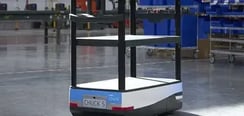
Chuck AMR is a collaborative autonomous mobile robot developed by 6 River Systems, now part of Ocado Group. Powered by Ocado IQ, Chuck carries orders and guides associates through picking and other configured warehouse workflows. Associates handle the products while the robot provides transport and task guidance.
Components
Components are individual hardware or software elements that work together within a larger system. Ocado’s storage, retrieval, and mobile robot solutions combine components such as robots, interfaces, and orchestration software.
Computer Vision
Computer vision is a field of artificial intelligence that enables systems to interpret visual information, such as images and video. In Ocado’s On-Grid Robotic Picking, machine vision helps identify products and suitable grasp points.
Conveyor System
A conveyor system moves goods or materials between locations using equipment such as belts or rollers. In a warehouse, conveyors can transport inventory, containers, or packaging between processes.
Cubic Storage
Cubic storage arranges bins in a three-dimensional structure to use both floor space and height. In Ocado’s Grid, storage bins are stacked in columns and accessed by Retrieval Bots. This supports dense inventory storage and automated access to goods.
Customer Fulfilment Centre (CFC)
A Customer Fulfilment Centre (CFC) is a dedicated, highly automated grocery fulfilment facility. Ocado CFCs combine storage, retrieval, picking, order assembly, and dispatch, coordinated through the Ocado Smart Platform.
Delivery Asset
Delivery assets are the packaging materials used to transport orders during the last mile of delivery. They can be delivery totes, containers, boxes, polybags etc. Outbound orders are picked into these delivery assets at pick workstations. Once orders are ready for dispatch, delivery assets are sent for outbound delivery.
Delivery Tote
Within OSRS, delivery totes are dedicated containers stored within grid bins. Outbound orders are picked into these delivery totes at pick workstations. Once orders are ready for dispatch, the delivery totes are separated from the bins and sent for outbound delivery.
Digital Twin (Technology)
A digital twin is a digital representation of a physical asset, process, or system that uses data to model its behaviour. Ocado uses simulation and digital twins to refine Customer Fulfilment Centre designs before launch and support operational improvement.
Downtime
Downtime is a period when equipment or a system is unavailable for its intended work. It may be planned, such as scheduled maintenance, or unplanned, such as a breakdown. Ocado’s storage and retrieval design uses measures such as automated battery exchange and rerouting around stopped robots to support availability.
DP8
DP8 measures customer deliveries per standardised eight-hour shift.
End Effector
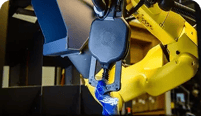
An end effector is the device or tool connected to the end of a robotic arm, designed to interact with the environment and perform specific tasks such as picking, placing, gripping, or manipulating items. The end effector is a crucial component of Ocado's robotic pick product, responsible for directly handling items from storage bins.
Fulfilment
Fulfilment is the process of completing a customer order, from order receipt through preparation and delivery. Warehouse operations are one part of that process.
Fulfilment Execution Software (FES)
Fulfilment execution software coordinates and prioritises warehouse work across people, equipment, and workflows. In Ocado’s current mobile robot solutions, Ocado IQ provides task orchestration for Chuck AMR, Porter AMR, and guided manual work.
Goods-to-Person (GTP)
Goods-to-person (GTP) is a fulfilment method in which inventory is brought to an associate at a picking location. Ocado’s storage and retrieval system supports this approach. Porter AMR can also support goods-to-person case picking by bringing inventory pallets to a designated picking area. In person-to-goods workflows, associates travel to the inventory.
Greenfield
Greenfield sites are undeveloped areas that have not been previously built upon. Greenfield developments require more extensive infrastructure and utilities to be installed from scratch compared to brownfield sites—however, they provide a greater opportunity for more complex or custom design.
Grid
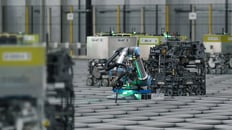
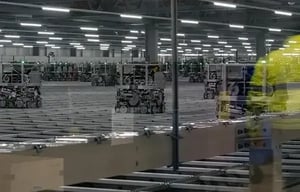
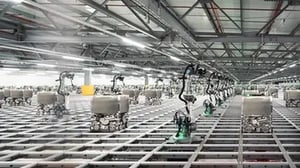
The Ocado Grid is a modular structure that stores bins in dense vertical stacks. Retrieval Bots travel across its top to retrieve and return bins, which can be presented to manual or robotic picking. The layout is configured around the building, inventory, and required throughput.
Grocery
The grocery industry includes organisations that sell and distribute food and household goods. Ocado supports online grocery operations through the Ocado Smart Platform, which connects ecommerce, supply chain, fulfilment, and last-mile capabilities.
Healthcare
The healthcare industry involves a broad spectrum of organisations and professionals dedicated to the provision and distribution of medical services, products, and care. Warehousing plays a crucial role in this industry, from temperature-controlled storage of medical supplies to automated ordering and prioritisation by date code.
Induct Station
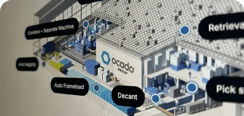
An induct station, also called a decant station in Ocado’s storage and retrieval solutions, is where incoming products are transferred into storage bins before entering the Grid. Guided instructions and stock-identification steps support the intake process and traceability.
In-Store Fulfillment (ISF)
In-Store Fulfillment (ISF) uses software to coordinate online grocery order preparation in stores and dark stores. Ocado’s ISF guides picking and post-pick activity through to collection or dispatch and can operate as a focused solution or as part of the wider Ocado Smart Platform.
Intelligent Automation
Intelligent automation refers to a comprehensive approach to automating existing systems through the use of advanced technologies including AI, robotics, and software algorithms for increased efficiency, availability and accuracy while reducing human intervention.
Inventory
Inventory within a warehouse refers to the stock of goods or materials carried by a merchant or distributor.
Inventory Management
Inventory management is the planning, monitoring, and control of stock levels, locations, and movements. It supports product availability and accurate records across receiving, storage, replenishment, and fulfilment.
Inventory Tracking
Inventory tracking refers to the process of monitoring and recording the movement, location, and status of inventory items within a warehouse.
Large Goods Vehicle (LGV)
Large goods vehicle (LGV) is a UK term for a large commercial vehicle used to transport goods.
Logistics
Logistics refers to the process of planning, implementing, and controlling the flow of goods, materials, and information from the point of origin to the point of consumption. It includes fulfilment, though covers the technical and logistical aspects of moving and managing goods throughout a supply chain.
Machine Learning
Machine learning is a field of artificial intelligence in which models learn patterns from data to make predictions or support decisions. Ocado’s On-Grid Robotic Picking uses machine learning to support product handling and improve picking and packing decisions.
Maintenance
In the context of warehouse automation, maintenance refers to the proactive and reactive actions taken to ensure the optimal performance, reliability, and longevity of automated systems and equipment.
Material Handling Equipment (MHE)
Material handling equipment includes the equipment and systems used to move, store, control, and protect goods during warehouse and fulfilment operations. Examples include conveyors, pallet trucks, forklifts, and automated handling systems.
Mezzanine
A mezzanine is an intermediate floor or platform within a building. In a warehouse, it can provide additional space for storage, work areas, equipment access, or maintenance.
Mobile Fulfillment App (MFA)
Mobile Fulfillment App (MFA) is a name used in earlier Ocado glossary content for handheld support of warehouse workflows. For Ocado’s current handheld guidance offering, see Ocado IQ App.
Modular Design
Modular design uses components that can be combined or expanded to suit an operation. Ocado’s storage and retrieval and mobile robot solutions can be configured around the required capacity and workflows. Expansion is planned around building constraints, system configuration, and operational needs.
Ocado IQ
Ocado IQ is the orchestration software behind Ocado’s mobile robot solutions. It coordinates tasks, routes, priorities, and work zones across Chuck AMR, Porter AMR, and guided manual workflows. The Ocado IQ App delivers handheld task guidance, while The Bridge provides management visibility and controls.
Ocado IQ App
The Ocado IQ App delivers system-directed task guidance to associates on compatible Android handheld devices. It supports manual and robot-assisted workflows, including work with existing material handling equipment, and connects that activity with Ocado IQ.
Ocado Mobile Robot System (OMRS)
The Ocado Mobile Robot System (OMRS) connects mobile robots, associates, and guided manual work through Ocado IQ. It combines Chuck AMR, Porter AMR, the Ocado IQ App, and management tools such as The Bridge to support configured warehouse workflows.
Ocado Retail Limited (ORL)
Ocado Retail Limited (ORL), also called Ocado Retail, is the UK online grocery retailer jointly owned by Ocado Group and Marks & Spencer. It operates separately from the technology solutions offered to other retailers.
Ocado Smart Platform (OSP)
The Ocado Smart Platform (OSP) is Ocado’s modular online grocery platform. It connects ecommerce, supply chain, fulfilment, and last-mile capabilities through software, automation, and data. Retailers can adopt the connected platform or selected capabilities that complement their existing operations.
Ocado Storage and Retrieval System (OSRS)
The Ocado Storage and Retrieval System (OSRS) combines a high-density Grid, storage bins, Retrieval Bots, workstations, and execution software to store inventory and present it for picking. Ocado’s Storage and Retrieval Solutions can combine manual and robotic picking, with the configuration designed around the building, product range, and order profile.
On-Grid Robotic Pick (OGRP)
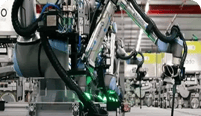
On-Grid Robotic Pick (OGRP), described on current product pages as On-Grid Robotic Picking, uses robotic arms to transfer suitable products from storage bins into order containers. Retrieval Bots present containers to the arms, while computer vision, sensing, and machine learning support handling decisions. It is used within the Ocado Smart Platform and is available for suitable applications within Ocado’s Storage and Retrieval Solutions. Manual picking and remote human support handle products or exceptions that need a different approach.
Order Line
An order line identifies a product or SKU and the quantity requested within an order. An order can contain multiple lines; lines may be picked, packed, or dispatched together or separately depending on the workflow.
Order Picking
Order picking refers to the selection, retrieval, and verification of items from within a warehouse to fulfil customer orders.
Packout
Packout is the process of packing picked products into dispatch containers or boxes and preparing them for dispatch. It is part of the wider order fulfilment process.
Palletising
Palletising is the process of arranging and stacking goods onto pallets in an organised manner for storage, transportation, and/or dispatch purposes. Palletising enables companies to maximise stability, space and load integrity while handling larger volumes of goods with minimal labour and resources.
Partner
In Ocado Smart Platform reporting, a partner is an Ocado Group customer that has purchased the Ocado Smart Platform or selected OSP capabilities to support its operations.
Person-to-Goods (PTG)
A person-to-goods (PTG) system refers to a logistics setup where warehouse workers move to different storage locations to pick or replenish items. Chuck AMR is a PTG autonomous mobile robot solution that can be used to improve putaway, picking, sorting and returns tasks. This system is contrasted with goods-to-person (GTP) systems, where items are brought to the workers by automated systems, such as conveyors, robotic shuttles, or automated storage and retrieval systems such as the OSRS.
Pick Station
A pick station is a workstation where an associate transfers products from storage bins into order containers, following task instructions. Ocado configures workstation types around the product and order profile. Pick and Store Workstations can return completed orders to the Grid for buffering.
Pick-to-Light (PTL)
Pick-to-light uses lights to direct an associate to a pick location or order container. In Chuck AMR, integrated lights identify the correct container section, while on-screen instructions and scan validation guide the task.
Pick Tunnel
A pick tunnel is a passageway within the OSRS grid structure that enhances order picking efficiency, ergonomics, and space utilisation. By allowing access to items from within the storage structure, pick tunnels reduce robot travel time and streamline picking processes, making them valuable for high throughput customer needs.
Porter AMR
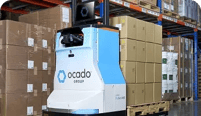
Porter AMR is a heavy-duty autonomous mobile robot that transports pallets and compatible cages and supports case-picking workflows. Ocado IQ coordinates its tasks and routes. Associates pick the products; Porter moves the load.
Predictive Maintenance
Predictive maintenance uses condition data to identify signs of deterioration and help plan maintenance before a failure occurs. It can support equipment availability and reduce unplanned downtime.
Putaway
Putaway moves received or returned goods to their assigned storage locations. Ocado’s storage and retrieval software plans inventory placement within the Grid, while mobile robot solutions can guide associates and transport goods through configured putaway and returns workflows.
Racking
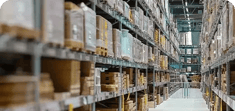
Racking within a warehouse is the structural framework of shelves or racks used to store goods.
Reinforcement Learning
Reinforcement learning is a machine learning approach in which a system learns from the outcomes of its actions. In Ocado’s On-Grid Robotic Picking, it helps improve picking and packing decisions over time. The technology also uses learning from human demonstrations and remote support for exceptions.
Replenishment
Replenishment refers to the process of resupplying inventory to storage locations or customer brick-and-mortar sites, to maintain adequate stock levels for order fulfilment and operational efficiency.
Retrieval Bot
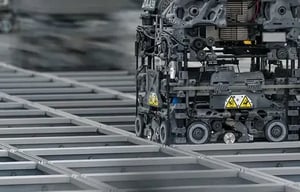
A Retrieval Bot travels across the top of the Ocado Grid to retrieve and return storage bins. Its single-cell footprint allows other bots to pass, while the system coordinates container movement to manual or robotic picking.
Robot
A robot is a programmable machine that performs physical tasks. Ocado uses different robot types for different jobs, including Retrieval Bots for accessing the Grid, Chuck AMR and Porter AMR for mobile workflows, and robotic arms for On-Grid Robotic Picking.
Robotic Pick
Robotic picking uses a robotic arm or other automated handling device to transfer products. For Ocado’s on-grid technology, including product suitability and human support, see On-Grid Robotic Pick (OGRP).
Sequencing
Sequencing refers to the process of determining the optimal order in which items are stored, retrieved, batched or put away within the system. Our WES software sequences retrieval and putaway tasks intelligently, to optimise throughput, minimise cycle times, and adapt to dynamic operational conditions to meet the evolving needs of the supply chain.
Services
Services include solution design, systems integration, deployment, maintenance, and ongoing support. Ocado works with customers to configure solutions, bring them into operation, and improve performance as requirements change.
Stock Keeping Unit (SKU)
Stock Keeping Units are unique alphanumeric codes or identifiers assigned to each distinct item in a customer's inventory. SKUs are used to track and manage inventory levels, facilitate stock control, and streamline the ordering and fulfilment processes.
Storage Density
Storage density describes how much inventory can be stored within a given area or volume, such as units per cubic foot or cubic metre. Increasing density can make better use of warehouse space, but access requirements and throughput also matter.
System Availability
System availability is the proportion of a defined measurement period during which a system is available to perform its intended function. The calculation depends on the agreed operating hours and treatment of planned and unplanned downtime.
System-directed Picking
System-directed picking uses software to assign and guide picking tasks. In Ocado’s mobile robot solutions, Ocado IQ coordinates priorities, routes, work zones, associates, and robots. Instructions are delivered through robot interfaces and the Ocado IQ App, helping associates complete the next appropriate task.
The Bridge
The Bridge is a management dashboard powered by Ocado IQ. It gives supervisors visibility of robots, tasks, queues, and workloads and provides controls to help manage the mobile robot operation.
Throughput
Throughput is the amount of work completed in a defined period, such as orders, units, or bin presentations per hour. Comparisons should use the same work unit, time period, and operating conditions.
Units Picked per Labour Hour (UPH)
UPH measures the average number of units picked per labour hour.
Universal Terminal
The Chuck AMR Universal Terminal is a display which offers a consistent user experience (UX) for all workflows. Executing our mobile sort software, it provides an engaging, step-by-step sortation experience making it simple for any associate to perform tasks with little training required.
Uptime
Uptime is a critical performance metric referring to the duration of time during which the system is fully operational and available for performing its intended functions without any interruptions or "downtime".
User Interface (UI)
A user interface (UI) is how a person interacts with a computer system. It includes controls and information presented through screens or other input and output methods. A graphical user interface (GUI) is one type of UI; warehouse interfaces can guide associates through tasks and workflows.
Warehouse Automation
Warehouse automation refers to the integration of technology and automated systems to streamline and optimise the processes involved in the storage, retrieval, and movement of goods within a warehouse or distribution centre.
Warehouse Efficiency
Warehouse efficiency refers to the overall effectiveness and productivity of warehouse operations, encompassing several key performance metrics and operational aspects. Efficient warehouse operations may involve maximising space utilisation and throughput, minimising operational costs and ensuring high accuracy and reliability in order fulfilment/replenishment.
Warehouse Execution System (WES)
A warehouse execution system (WES) coordinates and prioritises operational work across equipment and workflows. Ocado’s storage and retrieval execution software coordinates inventory placement, Retrieval Bots, and picking activity. A WES can integrate with a WMS; its scope is not identical to that of a warehouse control system (WCS).
Warehouse Management System (WMS)
A warehouse management system (WMS) manages warehouse information and processes such as inventory, receiving, order preparation, and dispatch. It can exchange information with execution and automation systems, including a WES. The division of responsibilities depends on the implementation.
Warehouse Safety
Warehouse safety involves the implementation of measures to ensure the safe operation of automated systems and the protection of workers, equipment, and inventory within the warehouse environment.
Warehouse Slotting
Warehouse slotting refers to the strategic placement and organisation of inventory within a storage solution to optimise the efficiency and effectiveness of warehouse operations. In OSRS, smart putaway algorithms work to ensure that items are stored in locations that maximise retrieval speed, minimise travel time and bin digs, and enhance overall productivity.
Webshop
A webshop is a customer-facing online store where shoppers browse products and place orders.
Workstations
Workstations are the points within a storage system at which stock is presented to a human operator for picking, packing and onward processing, or where stock is manually inducted into the system.
Zone Picking
Zone picking divides a warehouse into areas in which associates complete assigned picking work. Orders may move between zones or be consolidated after picking. In Ocado’s mobile robot solutions, Ocado IQ can adjust work zones and task allocation as priorities and operating conditions change.
Zoom by Ocado
Zoom by Ocado, also called Zoom, is Ocado Retail’s rapid grocery delivery service.