

















Transform warehouse productivity with Ocado’s intelligent, integrated Storage and Retrieval Solutions
When space and access to inventory become the constraint, adding labor alone cannot create the capacity the operation needs. Ocado’s storage and retrieval solution puts intelligence at the core of fulfillment, orchestrating inventory, automation and workflows as one connected operation. More than hardware or a point automation solution, it transforms fulfillment by intelligently coordinating how stock is stored, accessed and presented for picking, helping the operation adapt as demand and priorities change.
The solution is designed around your building, inventory and order profile. It can increase storage density, present stock to manual or robotic picking and support the flow of completed orders into the next process.
Move stock through one connected flow
Storage, retrieval, picking, buffering and release operate as one coordinated flow. Intelligence at the core of the system determines where inventory is stored, when it should be retrieved and how it moves through the next stage of fulfillment.


Match the picking approach to each product and order
Not every product or order requires the same handling method. Ocado configures manual and robotic picking around product suitability, order profiles, service requirements and the level of automation that creates value for the operation.
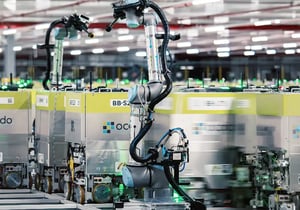
Pick and Store Workstations support cluster picking and can return completed orders to the Grid for buffering. On-Grid Robotic Pick automates suitable item transfers, while different workstation, buffering and release arrangements can support larger consumer orders or business replenishment.
This flexible approach increases throughput without assuming that every item should be handled in the same way.
Configure capacity around the building and the business case
Ocado assesses available space, building constraints, inventory characteristics, order demand and downstream processes before defining the solution. The Grid can be designed for greenfield or suitable brownfield facilities, including refrigerated environments down to 35°F and frozen environments.
A modular approach allows the investment to follow the constraint. Storage positions address inventory capacity, robots and routes support retrieval demand, and workstation choices determine how products and orders are processed. Expansion is planned around the building and the throughput the operation needs to serve.
Explore the components
behind the solution
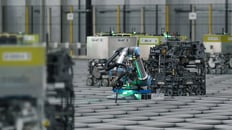
On-Grid Robotic Pick
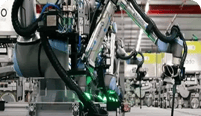
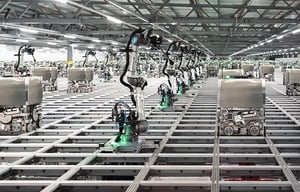
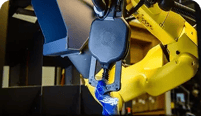
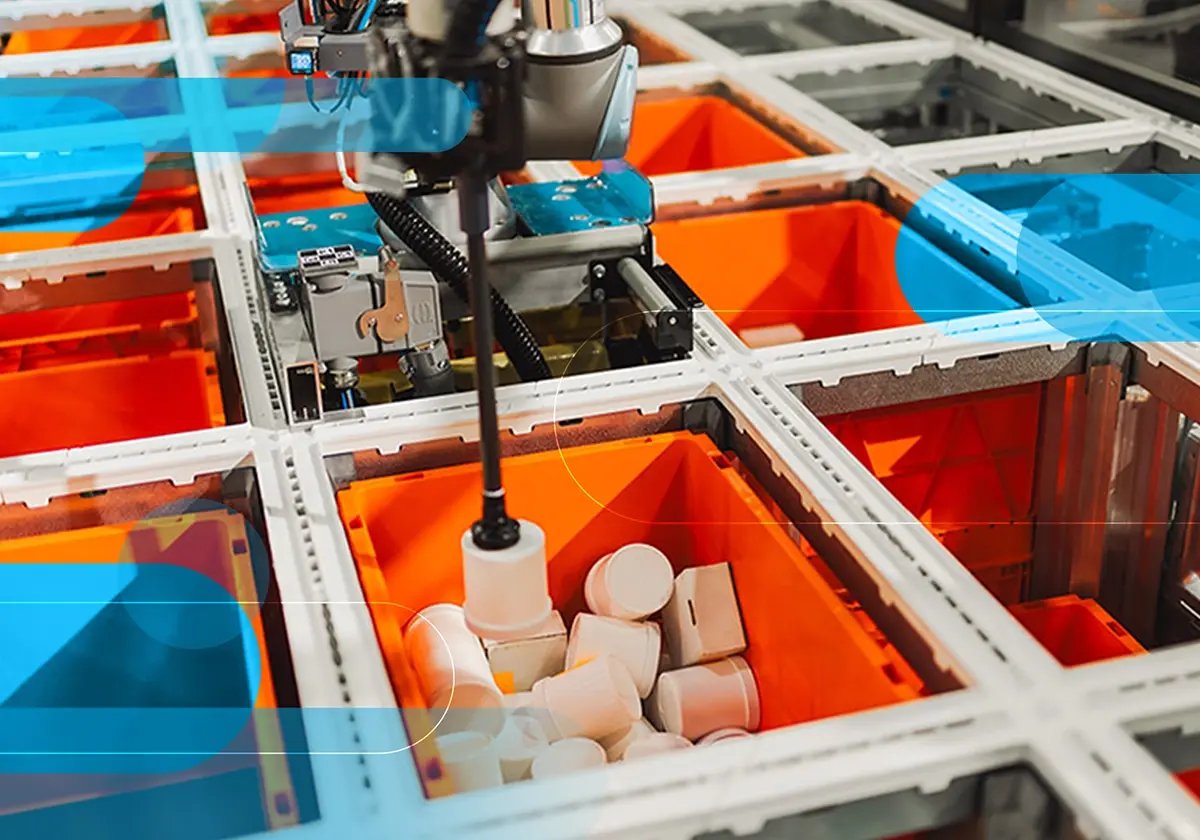
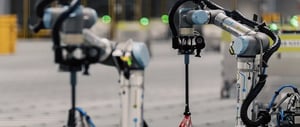
On-Grid Robotic Pick is an automated picking solution available 24/7 to alleviate the effect of labor fluctuations and unlock significant cost savings. Robotic pick uses cutting-edge computer vision sensing and machine learning to pick and pack products more efficiently than traditional methods by maintaining consistency, accuracy and availability.
Multiple simultaneous order preparations.
Read more
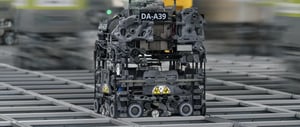
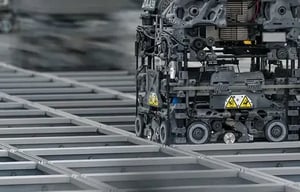
Retrieval Bots
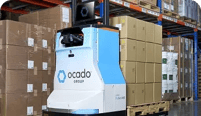
The OSP Bot is a high speed, high productivity worker that does the time-consuming job of fetching and dropping off totes with inventory, whether to human operated pick stations or our fully automated robotic pick arm. Our patented single grid cell footprint design allows bots to pass one another unobstructed, follow the most optimal routes and maintain industry leading availability.
Less than 60 seconds battery exchange time/ 2 hours operating time.
Read more
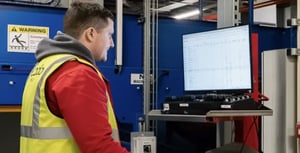
Software
Our Warehouse Execution System (WES) software uses advanced algorithms and live operational data to optimize tote storage and retrieval while coordinating the efficient use of bots and pick stations for the rapid picking of customer orders.
WES constantly monitors warehouse operational health and seamlessly adapts to manage operational challenges.
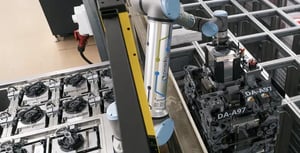
Battery swap
Battery swap provides high capacity automated battery exchange and charging for maximum bot uptime. Bots run with more than 99% uptime during operating hours with battery hot swaps taking under one minute typically occurring every two hours via robotic handling.
100 bots supported per station; 10 batteries charged simultaneously.

Grid
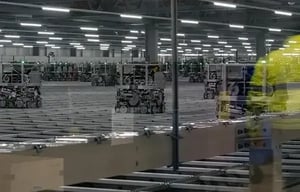
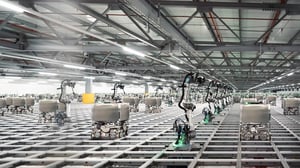
The grid sits at the heart of the Ocado CFC. It’s a light, flexible modular structure designed to secure and store inventory within densely stacked totes.
Stackable up to 21 totes high (about 25 ft) in a 34.5 ft warehouse, vertical space is maximized to efficiently store inventory within different temperature zones, and reduces (or better leverages) both the footprint and fixed costs.
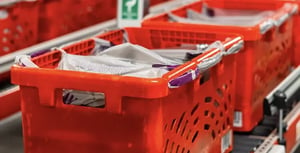
Totes
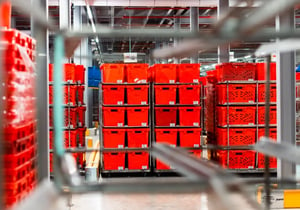
Totes are designed to store a wide range of SKUs efficiently and carefully, and are then used to buffer and deliver picked orders. A mix of plastic and metal totes can be deployed within the grid to achieve the appropriate level of protection and safety.
Up to 21 tote stack height for unparalleled cubic storage density.
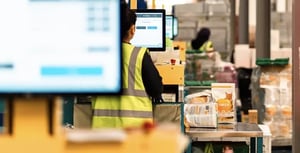
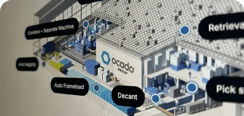
Decant
Decant stations help operators perform the critical task of transitioning products from inbound pallets into the grid, leveraging automation for high inventory processing efficiency, security and traceability.
A modern user interface steps operators through the entire stock induction process with imagery and clear instructions for the detrash of each product. Decant stations can process over 1,000 units per hour.
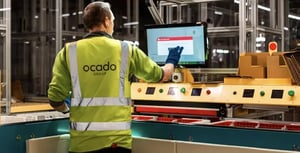
Pick stations
Our high throughput, human operated pick stations are used for applications where robotic picking isn’t suitable.
They provide an intuitive low-strain environment to help operators cluster pick multiple concurrent outbound orders and achieve exceptional productivity, consistently and with minimal training time.
Pick stations can process over 550 items per hour.
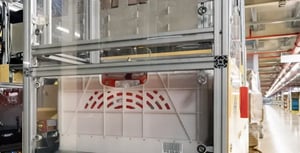
Combine + Separate Machine
The Combine + Separate Machine (CSM) replaces complex, costly and risky integration of extra equipment and processes by automating the insertion and removal of delivery totes into plastic and metal storage totes for secure, traceable transport in the grid. It optimizes the flow of these containers to and from pick stations and to outbound processes, reducing human touch points.
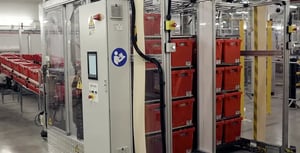
Auto Frameload
Ocado’s automated frameload technology loads the heavy customer orders onto dispatch frames using robotic vision systems and machine learning. The automated frameload machines remove the need for warehouse operatives to perform a physically strenuous task, streamline van loading operations and reduce health and safety concerns.
Can load up to 350 totes per hour.
Auto bagging
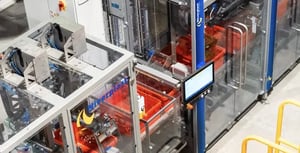
Automating the insertion of plastic and paper bags into totes, this technology ensures consistently high throughput and reduces labor cost and dependency. In addition, it minimizes downstream issues caused by incorrectly placed bags. Wide bag openings maximize pick productivity.
Up to 960 totes per hour with plastic auto bagging / 720 totes per hour with paper.
Autofreezer
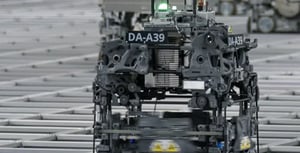
Extending the capabilities and benefits of Ocado’s grid and bots for frozen goods. Products are stored at −13°F in the setdown area and pulled to be decanted and picked at the appropriate time. Once full, dry ice is loaded into the tote lids and totes are then moved into the chill grid to be outloaded for frameload.

Build the capacity your operation needs next
Share your product range, available space, order profiles and growth plans. We’ll assess storage, retrieval, picking and downstream handoffs together, then identify the configuration that can address your next capacity constraint.